
START
A beautiful blue mountain stream and a famous spot for fresh greenery and autumn leaves
Dakigaeri Valley
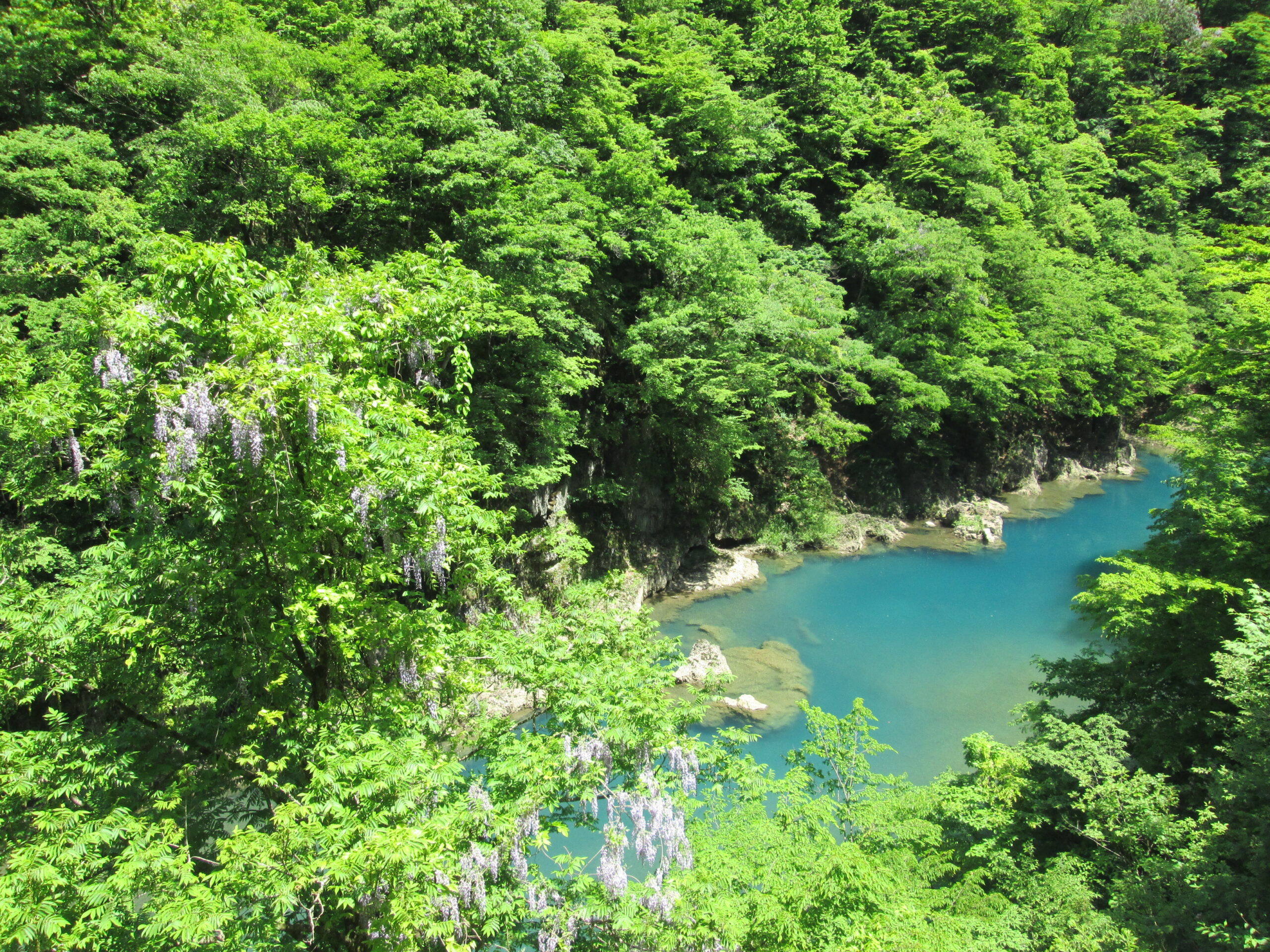
5 minutes by car from JR Jindai Station, 15 minutes by car from JR Kakunodate Station, 20 minutes by car from JR Tazawako Station
Learn moreApproximately 5 minutes
1
Stone monument at Dakigaeri Valley
Promenade entrance
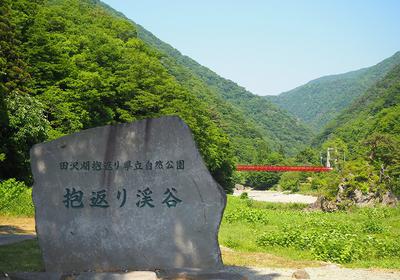
At the entrance, there is a stone monument of the Dakigaeri Valley. Turn here and you will reach the entrance to the walking trail.
Learn moreRecommended places to stop by
Legendary Rock
Shrine Maiden Stone
To the far right of the stone monument is the "Mikoishi" rock, with a pine tree growing out of it. This legendary rock is said to have been created when a shrine maiden who was visiting Yakushi Shrine was unable to cross the river due to flooding and was saved by Myojin. The story goes that the shrine maiden was so grateful to Myojin for saving her that she was transformed into a huge rock out of reverence.
Learn more2
Dakigaeri Shrine
Approximately 5 minutes
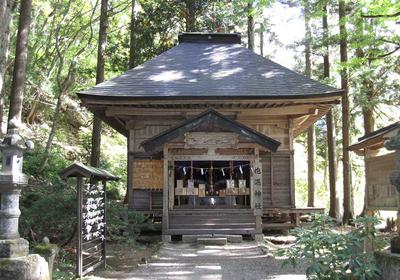
This shrine is surrounded by old cedar trees and sits near the entrance to the walking trail. In 1673 (the 13th year of the Kanbun era), a severe drought occurred when rice fields were being cultivated in Dakigaeri village. As a result of the water shortage, people prayed for rain at the water source of Dakigaeri, and torrential rains immediately began to pour down. The villagers rebuilt a new shrine and enshrined Mizusaku Daimyojin of Dakigaeri, and it is said that they also enshrined a branch of the spirit of Nyukawa Shrine in Yamato Province (present-day Nara Prefecture) at the same time. The current enshrined deity is Mizuhanome-no-kami, who is worshipped as the guardian deity of rainmaking, the dragon god, the water god, and the guardian deity of sericulture.
Learn moreApproximately 3 minutes
3
God's Rock Bridge
Approximately 2 minutes
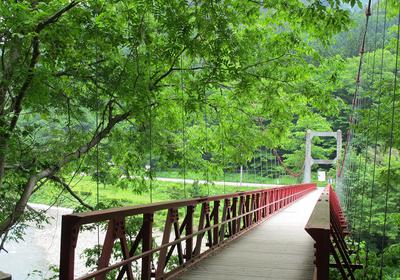
As you continue along the footpath, you will come across a red suspension bridge. This 80m-long suspension bridge spans the entrance to the valley and was built in 1926 for the forest railway. It is the oldest suspension bridge in the prefecture and is a spectacular spot from which you can get a panoramic view of the valley and the distinctive blue water surface.
Learn moreRecommended places to stop by
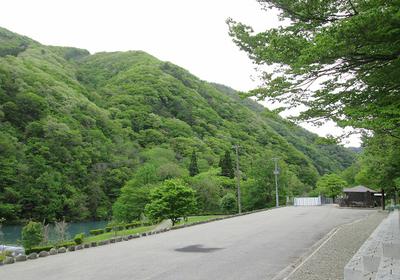
Dakigaeri 2nd Parking Lot
This is a rest area located just after crossing the Kami no Iwabashi Bridge. There are public toilets and benches here. The walking path from here onwards is gravel road and in places the path is wet from spring water, so please be careful where you step.
Learn moreApproximately 7 minutes
4
Tatami mat stone
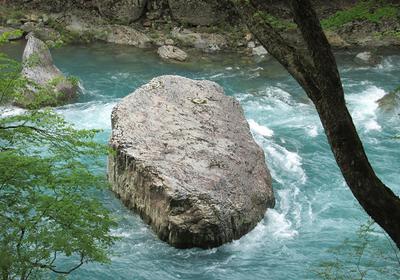
This is one of the strangely shaped rocks in the Dakigaeri Valley. The top of the huge rock, which holds back the rapids of the river, is smooth and wide enough to lay several straw mats on. This flat area is said to resemble the "Nezame-no-Toko" located upstream of the Kiso River in Shinshu.
Learn moreApproximately 5 minutes
5
Wakasa Rapids
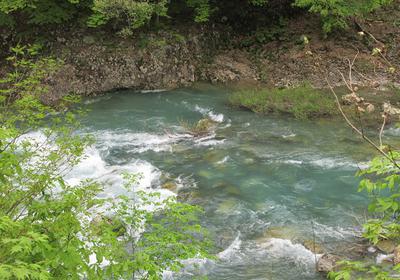
It is said that in the past, the sound of the river's rapid flow and the water crashing against the rocks sounded like the roar of a brave beast. Now, with the water level reduced by a dam, some people describe it as the "whisper of an old tiger."
Learn moreApproximately 10 minutes
6
Seiganji Temple/Seiganbashi Bridge
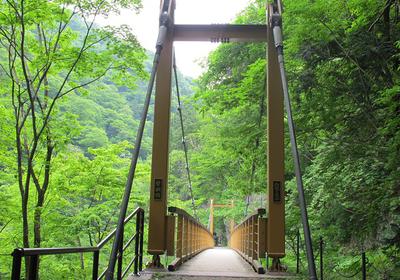
This is the most scenic spot in the Dakigaeri Valley. Although it is called "Temple," there is no actual temple here. The cliffs on both sides of the river are so close together that when the water flows into the deep pool, the foam that appears resembles the smoke that drifts when incense is burned at the temple, hence the name. Also, Seigan Bridge is a new suspension bridge built over the walking path that was lost due to a collapse.
Learn moreApproximately 5 minutes
7
Waterfall to represent theDakigaeri Valley
Mikaeri no Taki
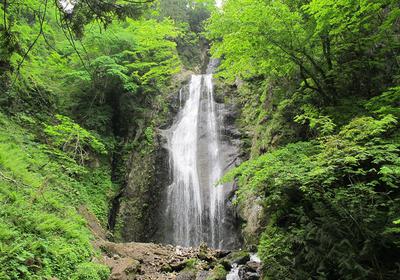
This is the most famous spot in the Dakigaeri Valley. One of the reasons for its popularity is that it changes its appearance with the seasons, and it is like watching a woman change into a kimono. The waterfall that falls from between the trees has a majestic and elegant appearance, and looks like a white silk cloth hanging from it. It is a waterfall that you will want to look back on and see again and again, just as its name suggests.
Learn moreApproximately 5 minutes
GOAL
Iimura Youth Memorial Monument
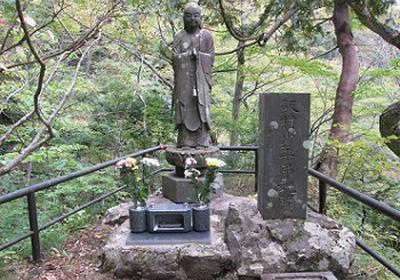
This is a memorial monument for the young boy, Hideji Iimura (5th grade at Kakunodate Elementary School), who lost his life on October 27, 1935, while trying to save his younger sister who accidentally fell off a cliff while visiting a valley to view the autumn leaves. The younger sister was saved by a tourist thanks to the protection of his brother's demon god, but to pass on the brotherly love of young Hideji despite his tragic end as a lesson for future generations, sympathy was expressed from elementary schools in the county and from outside the prefecture, and a Jizo statue and monument were erected here to pray for the repose of young Hideji's soul.
Learn more